Level Foundations That Support Decades of Use
Building Pads in Cub Run for homes, garages, barns, and commercial structures requiring stable, compacted bases
Building pads establish the level, compacted surface that determines whether structures settle uniformly or develop cracks from uneven support over time. Accurate grading during pad preparation ensures that footings rest on soil compacted to specified densities, with drainage slopes directing water away from foundation perimeters before concrete gets poured. Dog Creek Excavating LLC prepares building pads for residential and commercial projects across Cub Run, paying close attention to soil conditions and drainage paths that affect long-term stability.
Pad preparation involves excavating to the depth specified by engineering plans, removing organic material and unsuitable soil, placing select fill in controlled lifts if elevation needs raising, and compacting each layer to densities that prevent future settling. Drainage considerations require grading the pad surface with slight slopes that move water away from the building footprint while keeping the foundation area level within tolerances measured in fractions of an inch across the pad width.
Request a detailed estimate based on your planned structure's size, foundation type, and current site conditions.
What Changes After Building Pad Preparation
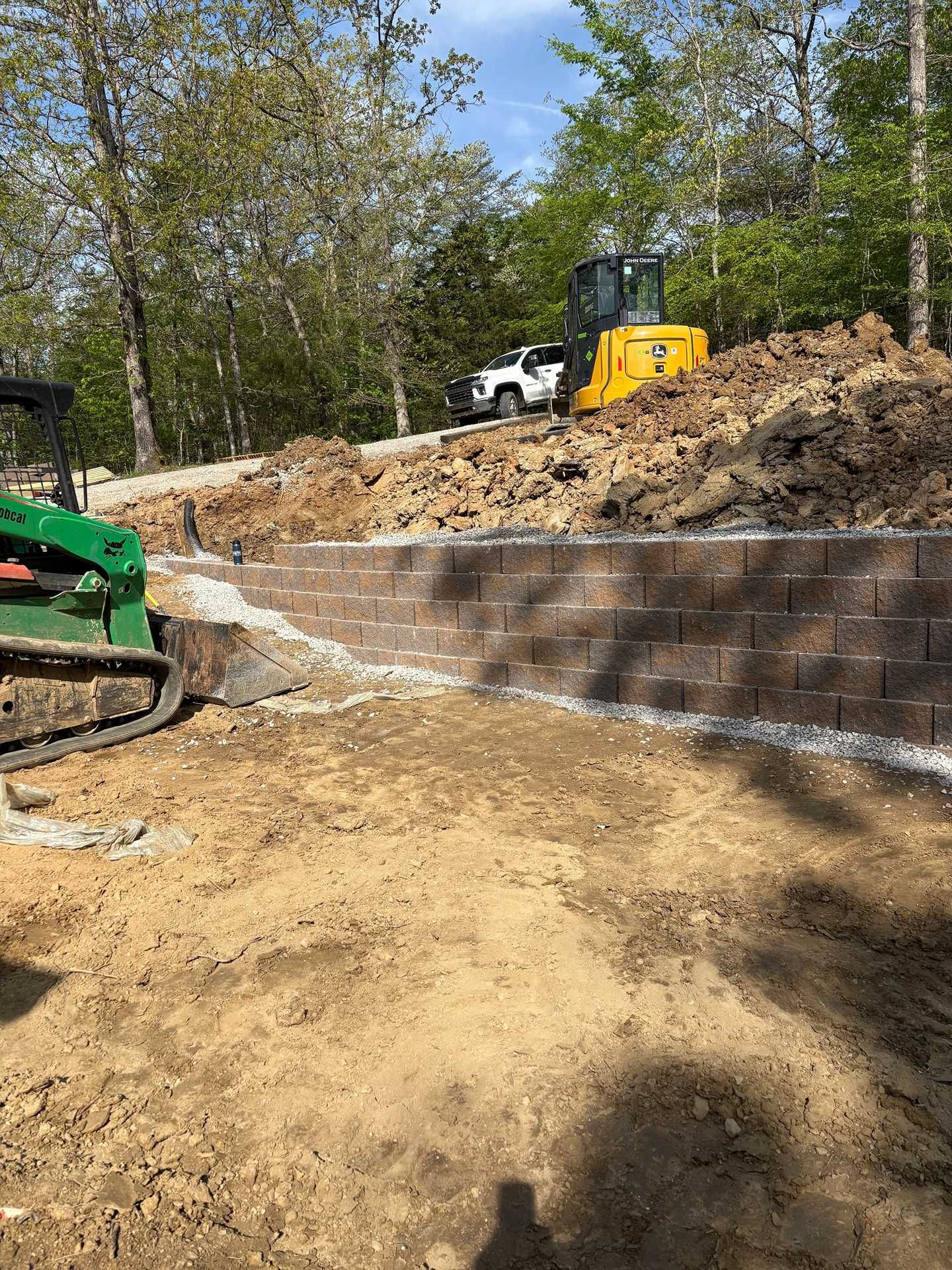
Proper building pad work creates a surface that feels uniformly firm when walked across, with no soft spots indicating loose fill or areas where boots sink into uncompacted soil. Survey stakes confirm that elevations match foundation plans at multiple points, and standing water drains visibly away from the pad perimeter during rain rather than pooling near where footings will be placed. Compaction testing with specialized equipment verifies that soil density meets engineering specifications before concrete work begins.
Pad preparation for residential structures differs from commercial work in scale and load requirements—home building pads for single-family construction typically involve shallower excavation and lighter compaction equipment, while commercial pads supporting larger structures or heavy equipment require deeper base preparation and multiple passes with larger compactors to achieve higher density standards. Barns and agricultural buildings often need pads with specific drainage features that prevent manure or wash water from concentrating near foundation walls.
Soil conditions influence pad preparation methods significantly—clay soils common in Central Kentucky compact well when moisture content falls within optimal ranges but become difficult to work when too wet, requiring weather windows for proper pad construction. Rocky soil may require removal and replacement with engineered fill, while sandy soil needs careful attention to compaction depth since surface firmness doesn't always indicate adequate density throughout the pad thickness.
Common Questions About This Service
Builders and property owners preparing foundation sites often need clarification about pad specifications, timing, and quality indicators before excavation equipment arrives on-site.
What makes a building pad adequate versus inadequate for long-term structural support?
Adequate pads have uniform compaction throughout the depth of placed fill, drainage slopes that prevent water from pondering near foundations, and soil density verified through testing, while inadequate pads show soft spots from incomplete compaction, grade reversals that trap water, or organic material left in the base that will decompose and create voids.
How does pad preparation account for different foundation types like slab-on-grade versus pier-and-beam?
Slab foundations require large, uniformly compacted pads covering the entire building footprint with precise elevation control across the surface, while pier-and-beam foundations need smaller compacted areas at each pier location plus attention to crawl space drainage between piers.
When should building pad work be completed relative to other construction activities?
Pads are typically finished after utility lines are trenched and backfilled but before concrete contractors arrive to pour footings, allowing soil to stabilize after trenching disturbance while preventing delays in foundation work.
What site conditions in the Cub Run area most commonly affect building pad stability?
Clay soil that expands when wet and shrinks when dry requires careful moisture management during compaction and drainage design that keeps foundation zones from becoming saturated, while sloped sites need cut-and-fill grading that balances excavated material with fill areas to minimize hauling costs.
How do contractors verify that a building pad is ready for foundation construction?
Verification involves visual inspection for uniform appearance without soft spots, compaction testing using nuclear density gauges or plate load tests, survey confirmation that elevations match plans within tolerance, and checking that drainage slopes move water away from the pad during rain events.
Dog Creek Excavating LLC serves builders and property owners throughout Central Kentucky, preparing building pads with accurate grading and proper base compaction for long-term stability. Request a free quote to review foundation requirements and site-specific preparation steps for your project.