Soil That Stays Where You Need It
Erosion Control in Cub Run for properties experiencing runoff damage, slope failure, or sediment loss
Erosion carves channels through graded surfaces, undermines foundations, and deposits sediment in unwanted locations when water flows across unprotected soil at speeds that lift and transport particles. Grading improvements that redirect runoff and drainage systems that slow water movement prevent soil loss while protecting completed construction from undermining. Dog Creek Excavating LLC implements erosion control solutions across residential, agricultural, and commercial properties in Cub Run, customizing approaches based on slope angles, soil types, and runoff volumes each site experiences during heavy rain.
Erosion control work addresses both the velocity of water moving across surfaces and the stability of soil itself—grading creates gentler slopes or terraces that reduce flow speed, while drainage structures like swales or berms intercept runoff before it gains erosive force. Properties in Central Kentucky with clay soils face different erosion patterns than sandy soils, as clay resists initial movement but forms deep gullies once erosion begins, while sandy soil erodes gradually across wider areas unless stabilized.
Schedule a free consultation to assess erosion patterns and drainage improvements needed to protect your property.
Why Erosion Happens and How to Stop It
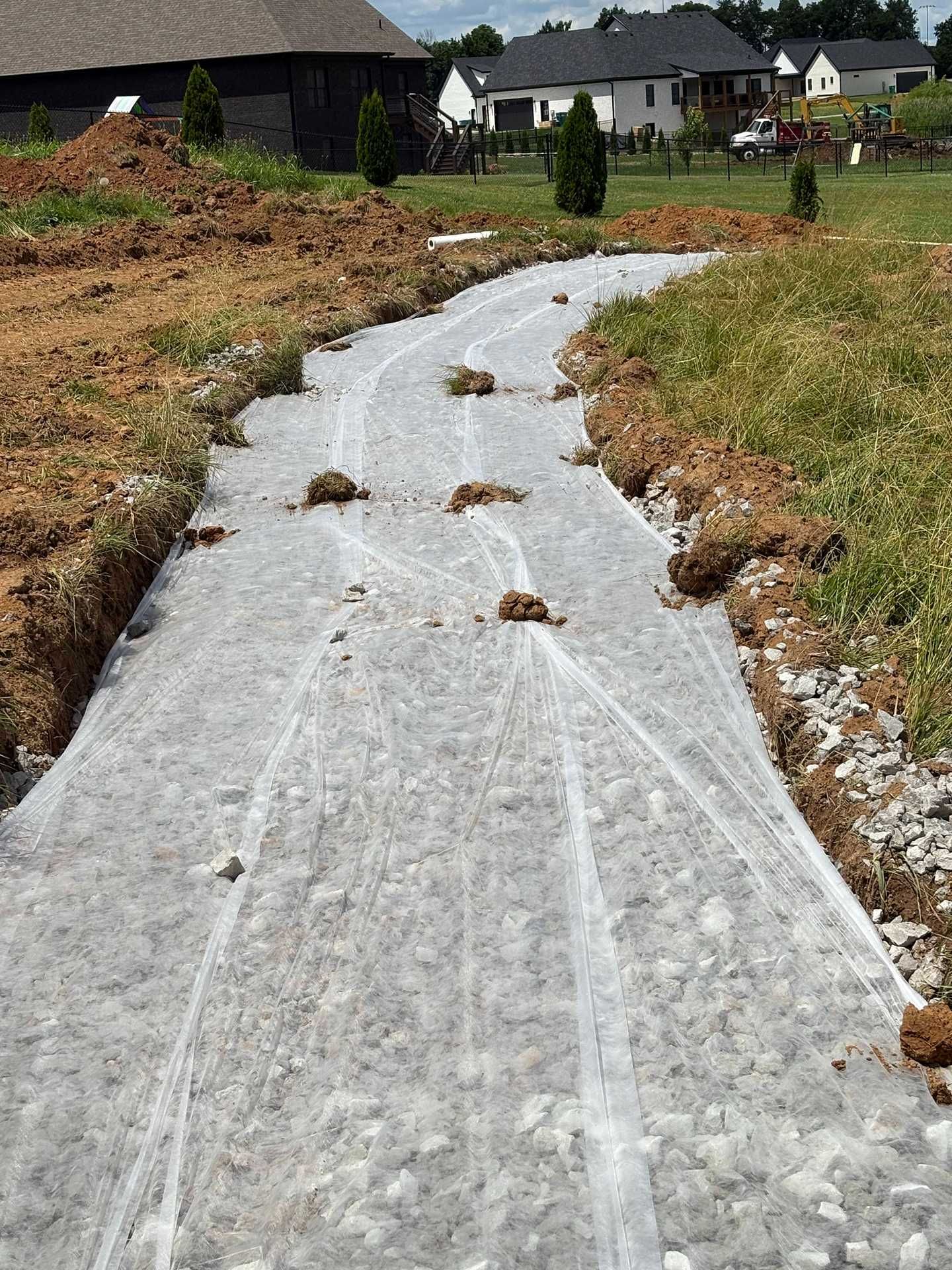
Erosion occurs when rainfall intensity exceeds soil's ability to absorb water, creating runoff that accelerates as it flows downslope and picks up soil particles, with erosion severity increasing exponentially as flow velocity doubles. Control measures work by reducing flow speed through grading that lengthens the path water travels, increasing infiltration with vegetation or permeable surfaces that absorb runoff before it concentrates, and armoring channels with rock or other materials where concentrated flow cannot be avoided.
After erosion control measures are installed, you notice water dispersing across wider areas rather than concentrating in channels, soil remaining in place during storms instead of washing into low areas or drainage ditches, and vegetation establishing successfully because seedlings aren't uprooted by flowing water. Grading changes may create visible swales that carry water at controlled speeds, or berms that divert flow away from vulnerable areas.
Dog Creek Excavating LLC evaluates site-specific conditions to determine which erosion control methods suit each property—some sites benefit from regrading slopes to gentler angles, others need drainage swales or French drains that intercept subsurface water, and construction sites may require temporary measures like silt fences or straw bales until vegetation becomes established. Agricultural properties often need solutions that protect fields while maintaining usable land, while residential projects focus on protecting foundations and landscaping.
What Property Owners Usually Ask
Erosion issues across Central Kentucky prompt questions about causes, solutions, and maintenance requirements as property owners work to prevent ongoing soil loss and damage.
What causes erosion to suddenly worsen on properties that were previously stable?
Erosion often accelerates after changes in vegetation cover like tree removal or construction that exposes bare soil, modifications to upslope grading that increase runoff volume reaching the property, or soil compaction from traffic that reduces infiltration and forces more water to run off rather than soak in.
How do grading improvements control erosion differently than structures like retaining walls?
Grading works with natural drainage patterns by creating slopes gentle enough that water flows slowly without lifting soil particles, while retaining walls hold soil in place vertically but don't address water movement, so effective erosion control often combines both approaches depending on site constraints.
When should erosion control measures be installed relative to other site work?
Erosion control works best when implemented before soil loss begins—installing measures during initial site development prevents damage, while addressing existing erosion requires repairing gullies and stabilizing slopes before protective features can function properly.
What determines whether erosion control requires ongoing maintenance?
Vegetated erosion control like grass swales needs periodic mowing and inspection for washouts, rock-lined drainage channels require checking for sediment accumulation that reduces capacity, and any system benefits from annual inspection after heavy rain to verify that flows follow designed paths without creating new erosion.
How do erosion control solutions need to differ for properties in Cub Run compared to other regions?
Local clay soils form hard crusts when dry that increase runoff even on gentle slopes, then develop deep gullies once erosion channels establish, so solutions emphasize maintaining vegetation cover and intercepting runoff before it concentrates, while also accounting for freeze-thaw cycles that destabilize exposed slopes during winter months.
Dog Creek Excavating LLC serves residential, agricultural, and commercial properties throughout Central Kentucky, implementing customized erosion control solutions that protect soil and structures from runoff damage. Contact Dog Creek Excavating LLC at (270) 925-8107 to arrange an evaluation of erosion concerns and grading options for your property.