
Surfaces Built for Daily Vehicle Traffic
Driveway Installation in Cub Run for new construction, replacement projects, and properties requiring improved access
Gravel driveways built with proper base preparation and drainage grading handle daily vehicle use without rutting, washouts, or surface degradation. Dog Creek Excavating LLC constructs durable driveways for residential and rural properties throughout Cub Run and the surrounding region. The work involves excavating unstable topsoil, installing compacted base layers, and grading surfaces to shed water—preventing the soft spots and erosion that develop when driveways lack adequate foundation or slope.
Driveway construction begins with clearing the drive path and excavating organic soil that compresses under vehicle weight. A crushed stone base is installed in compacted layers, followed by gravel surfacing sized for traction and stability. Proper grading creates a crown or cross-slope that directs water off the surface, while culverts or drainage swales prevent water from pooling or cutting channels across the drive during heavy rain events common in Central Kentucky.
Request a free driveway estimate to review base requirements and grading plans specific to your property.
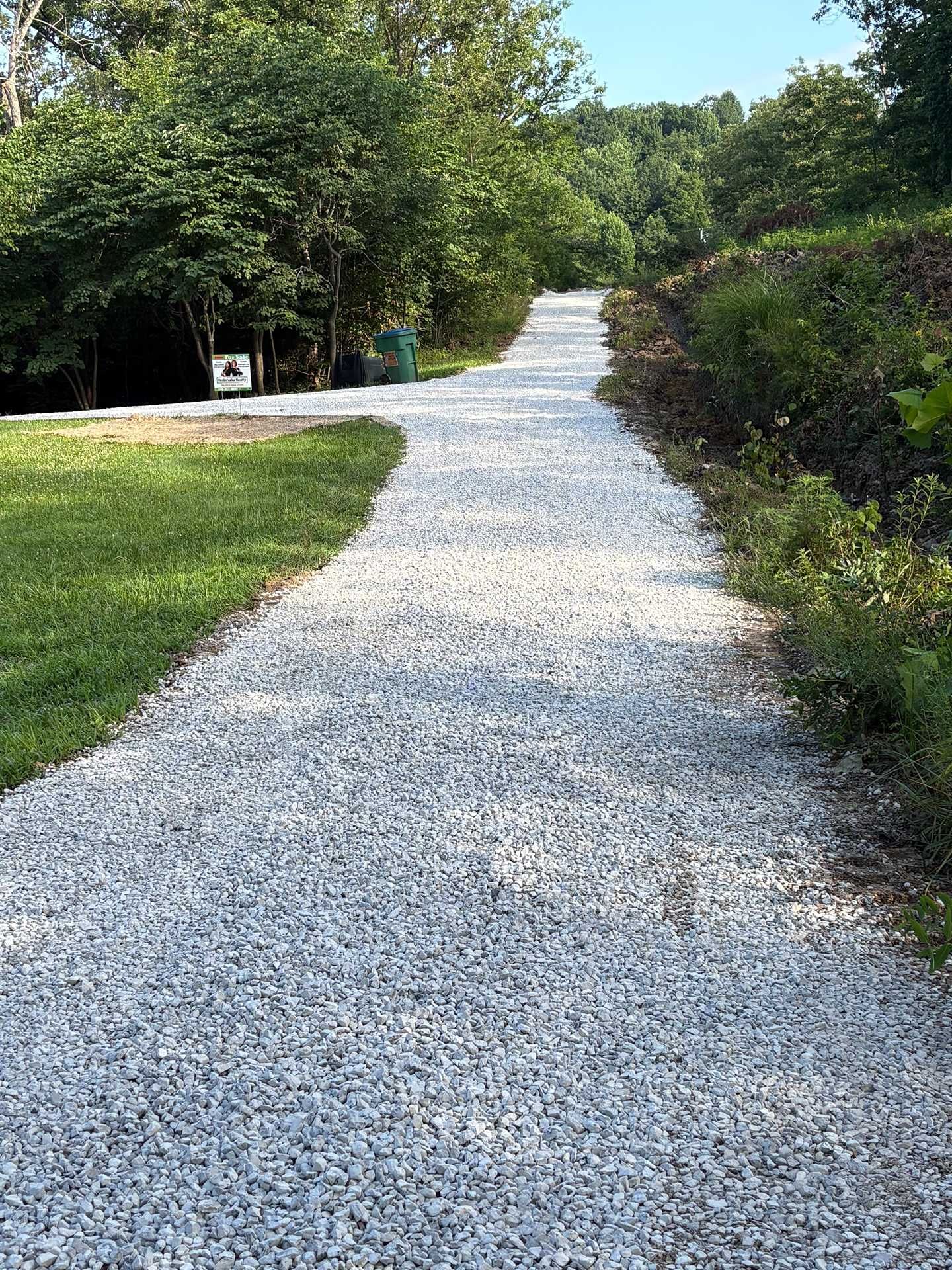
Why Base Preparation Works for Long-Lasting Driveways
Driveway installation requires removing topsoil and organic material to expose stable subgrade, followed by compacting base rock in lifts to prevent settling. The base depth varies with soil conditions and expected traffic, with clay soils requiring deeper bases to distribute vehicle weight and prevent rutting. Gravel surface layers use angular stone that locks together under compaction, resisting displacement better than rounded gravel that shifts under turning tires.
Once installation is complete, you'll drive on a firm surface that doesn't develop ruts, puddles, or washouts during wet weather. Vehicles no longer struggle with muddy access or soft spots that trap tires, and the driveway maintains a consistent grade that sheds water instead of channeling it down the center. Properly built driveways require only periodic gravel top-dressing rather than full reconstruction, extending service life and reducing maintenance costs.
New installations include establishing drainage paths, installing culverts where drives cross ditches or low areas, and compacting edges to prevent material migration. Replacement projects often involve correcting drainage issues that caused the original driveway to fail, which may include regrading slopes or adding subsurface drainage in areas with persistent water problems.
What Property Owners Usually Ask
Homeowners planning driveway projects often inquire about material choices, drainage solutions, and construction methods before work begins.
What base material is used for gravel driveways?
Crushed limestone or recycled concrete provides a stable base that compacts tightly and resists shifting, with depth determined by soil bearing capacity and whether the drive serves occasional or daily traffic.
How does grading prevent driveway washouts?
Crowning the drive center or sloping it to one side directs rainwater off the surface before it gains erosive velocity, while grading the drive path to avoid low spots prevents water from pooling and softening the base.
What causes driveways to develop ruts in Cub Run?
Inadequate base depth over clay soils allows vehicle weight to compress the base and subgrade, creating depressions that collect water and worsen with each wet-weather use.
When should driveway replacement happen?
Replacement becomes necessary when rutting exceeds a few inches, washouts expose bare subgrade, or repeated gravel additions no longer restore a firm driving surface.
What's included in driveway installation?
Installation includes excavation, base rock placement and compaction, gravel surfacing, final grading for drainage, and culvert installation where drives cross drainage paths or low-lying areas.
Dog Creek Excavating LLC builds gravel driveways for residential and rural properties requiring reliable vehicle access. Set up a consultation to evaluate your site's drainage conditions, soil type, and driveway layout options.