Sites That Drain Correctly From Day One
Grading in Cub Run for properties with standing water, unstable soil, or poor drainage patterns
Water pooling around foundations, driveways that channel runoff toward buildings, and uneven settling across construction zones signal grading problems that worsen with every rain. Dog Creek Excavating LLC handles both rough grading that shapes raw sites for construction and finish grading that directs water away from completed structures across Cub Run and Central Kentucky. Precision equipment and experienced operators adjust elevations in increments that prevent erosion while creating stable surfaces for long-term use.
Rough grading establishes the foundational contours of a site, removing high spots and filling low areas to create stable building zones, while finish grading fine-tunes the surface with slopes calculated to move water toward drainage points without creating erosion channels. Properties in areas with clay-heavy soil require careful attention to compaction and slope angles, as clay sheds water rapidly when graded incorrectly but holds it in place when contours follow natural drainage paths.
Schedule a property evaluation to identify specific drainage concerns and grading adjustments needed for your site.
How Grading Prevents Water Damage and Settling
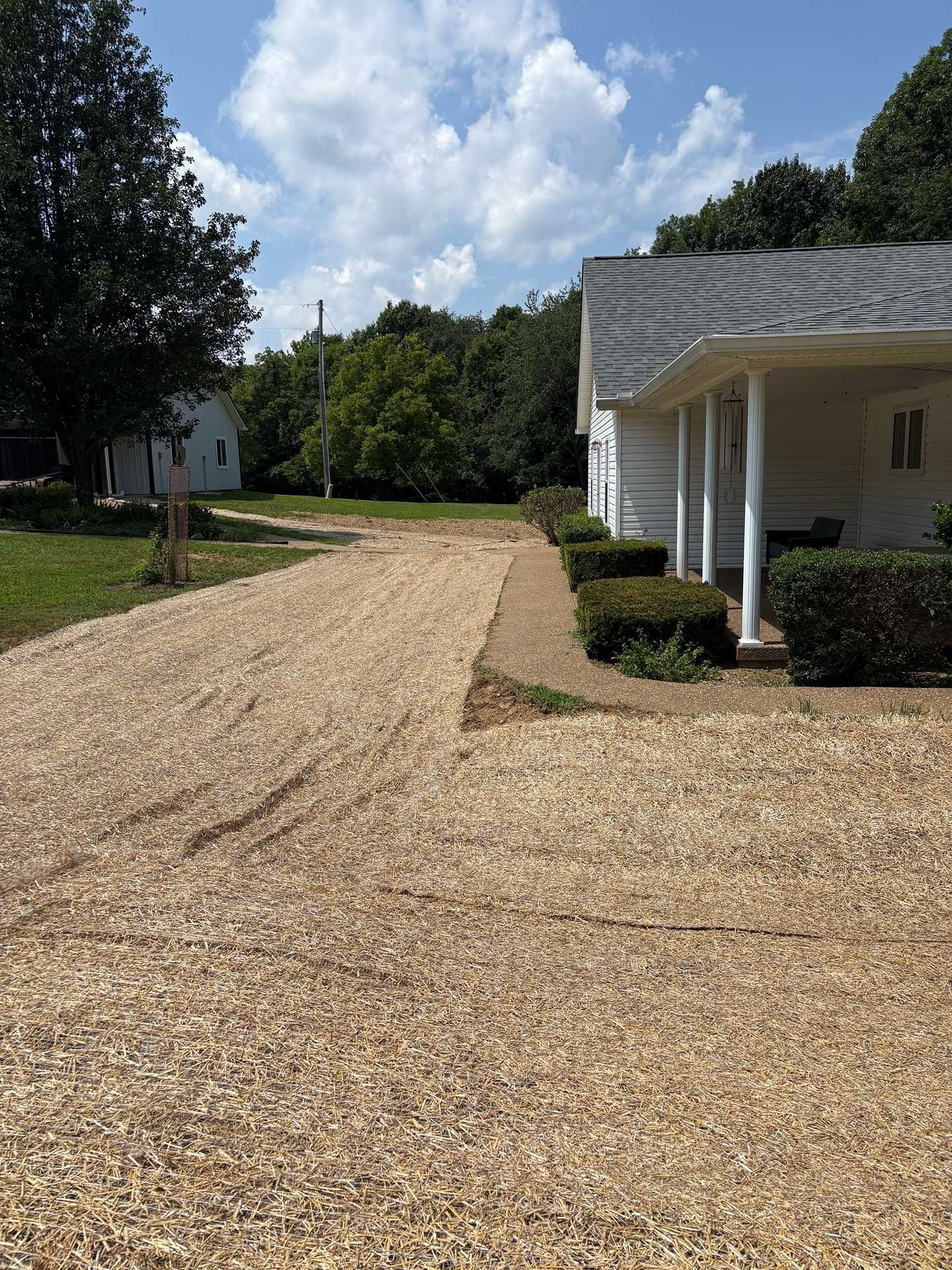
Proper grading involves multiple passes with equipment calibrated to specific slope percentages, compacting soil in lifts that prevent future settling while establishing drainage paths that move water at controlled speeds. Rough grading shapes the site to elevation benchmarks set by construction plans, while finish grading creates the final surface with slopes typically ranging from two to five percent depending on soil type and proximity to structures.
After grading work finishes, you notice water moving visibly away from buildings during rain events rather than pooling near foundations, driveways and walkways that remain level without dips or high spots, and construction areas that stay firm underfoot instead of turning muddy. Vegetation establishes more evenly across graded surfaces because water distributes uniformly rather than concentrating in low pockets.
Grading for residential projects addresses different priorities than commercial work—home sites focus on protecting foundation perimeters and landscaping zones, while commercial properties require larger drainage corridors and compaction standards that support heavy vehicle traffic. Equipment selection changes based on site access, with compact graders handling tight residential lots and larger machinery covering open commercial parcels more efficiently.
Questions Property Owners Ask Before Grading
Grading projects across Central Kentucky often raise similar concerns about process, timing, and outcomes as property owners prepare sites for construction or address existing drainage issues.
What determines whether a site needs rough grading, finish grading, or both?
Rough grading is necessary when raw land requires significant elevation changes or when building pads must be carved from sloped terrain, while finish grading refines surfaces around completed structures or prepares final contours before landscaping, and many projects require both in sequence.
How does grading work differ between properties with sandy soil versus clay soil?
Clay soil in the Cub Run area compacts more firmly but drains slower, requiring grading slopes that account for water sheeting across the surface rather than percolating through, while sandy soil allows faster infiltration but needs steeper slopes to prevent erosion channels from forming during heavy rain.
What happens if grading work gets delayed by weather?
Rain delays grading because equipment cannot achieve proper compaction on saturated soil, and working wet ground creates ruts that require rework, so scheduling typically accounts for weather windows that allow soil to dry enough for machinery to operate without damaging the grade.
How long does graded soil need to settle before construction starts?
Properly compacted grading settles minimally if soil is placed in controlled lifts and compacted to specified densities during the grading process, allowing construction to proceed immediately on residential projects, though some engineers specify waiting periods for large commercial sites with deep fill zones.
What changes around a property immediately after finish grading is completed?
Water flows visibly toward designed drainage points instead of pooling randomly, the ground feels uniformly firm when walked across rather than soft in spots, and survey stakes or grade markers confirm that elevations match construction plans at measured intervals.
Dog Creek Excavating LLC provides grading services for residential and commercial projects throughout Central Kentucky, using precision equipment to establish drainage patterns that protect structures and reduce erosion. Request a free grading estimate to review site-specific requirements and slope adjustments needed for your property.